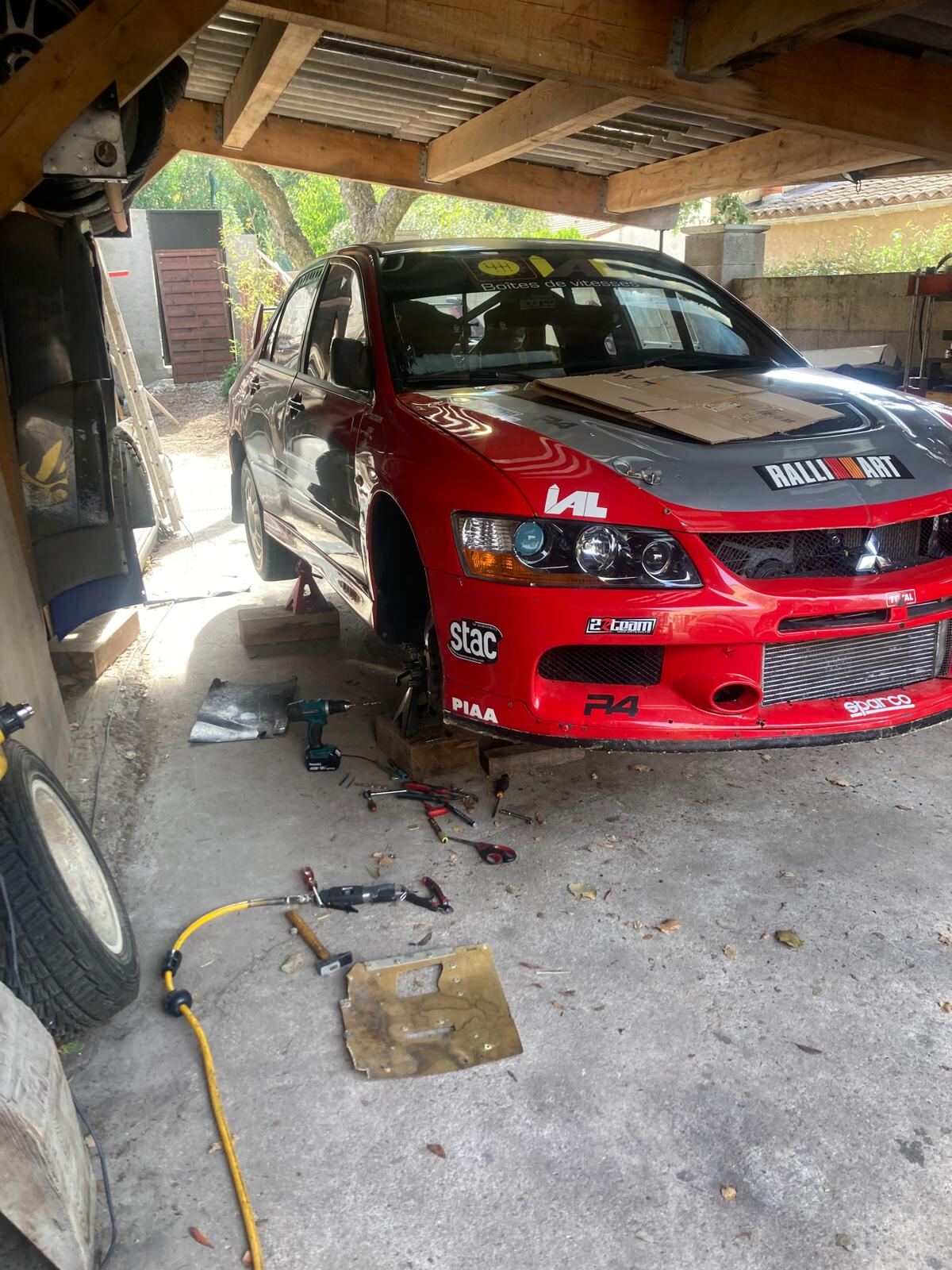
Rallye du Var at Sainte-Maxime, the final round of the French championship, with its VHC and VHRS historic classes. Roches Brunes at Roquebrune. Fayence. Circuit du Luc and its driving school. Circuit Paul Ricard.
A historic competition car needs exactly the two things we do: repairing an old shell, and welding a safety structure to standard.
And a competition car travels on a trailer. Distance isn’t your problem — and if it is, we’ll come and get it.
There are three legal categories of competition cage. The difference isn’t cosmetic — it decides what passes scrutineering.
| Appendix J compliant | Built to the drawings and dimensions in FIA Article 253-8. No paperwork required at scrutineering. This is what we build. |
|---|---|
| ASN certified (FFSA) | Built by an approved constructor and carrying an individual ID plate. A certificate is required at scrutineering. |
| FIA homologated | Requires a Variante-Option extension on the car’s homologation form. |
| Material | Cold-drawn seamless carbon steel, minimum 350 N/mm² tensile strength |
|---|---|
| Main hoop | 45 × 2,5 mm or 50 × 2,0 mm |
| Members | 38 × 2,5 mm or 40 × 2,0 mm |
| Welding | Full perimeter of the tube, full penetration |
| Bending | Radius at least three times the tube diameter |
No roll cage is road-homologated in France. A cage is competition equipment.
A homologated or certified cage cannot legally be modified or repaired without its original constructor’s approval. If yours is damaged, we’ll point you in the right direction rather than reach for the welder.